.svg)
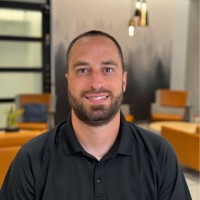
In this episode, Adam Smith sits down with leadership coach Scott Millson to talk about what modern leadership really requires. Scott breaks down why the strongest leaders are the ones willing to admit what they do not know, how Trust is built through consistent behavior rather than perfect answers, and why understanding problems beats pitching products every time.
As Scott put it, "The most powerful thing a leader can say sometimes is 'I don't know,' because it invites collaboration instead of shutting it down."
This episode challenges outdated leadership habits that create pressure, burnout, and misalignment. Instead, it offers a practical way forward based on humility, problem-solving, and building strong relationships across teams and clients.
Many leaders still believe credibility comes from having every answer ready. Scott calls this the biggest myth in modern leadership. Leaders often stress themselves out by trying to know everything and guess everything, and teams can feel that pressure.
As Scott said, "Leaders get into trouble when they feel they have to know everything. Honesty builds more Trust than pretending to have all the answers."
Adam Smith added perspective from his own leadership experience.
"The leaders I respect most are the ones who say 'I don't know' without hesitation. You can only build Trust with honesty, not with perfection."
When leaders trade certainty for authenticity, teams become more engaged and more collaborative. It sets the foundation for a healthier culture where people can speak honestly without fear.

Scott walks through a trust formula that he uses in executive coaching sessions, "Trust is not a feeling. It is a formula. Credibility plus reliability plus intimacy, all divided by self-orientation. The lower your self-orientation, the faster Trust grows."
Credibility + Reliability + Intimacy, divided by Self Orientation.
This is the model that separates authentic leaders from positional leaders.
Credibility
Do people believe you know what you are talking about?
Reliability
Do you show up consistently and follow through?
Intimacy
Do people feel safe telling you the truth?
Self Orientation
Are you focused on your own success or the success of the team?
Scott highlights that most leaders spend years building the top three, then ruin everything in seconds by letting self-orientation rise too high. When decisions are made to protect ego or avoid vulnerability, Trust collapses.
The antidote is simple but not always easy. Slow down. Ask for feedback. Admit uncertainty. Build intimacy so your team feels safe being honest with you.
A recurring theme in the episode is the idea of relying too heavily on price to win business. When teams lean on price, they bake their value into something they cannot control. Someone can always come in cheaper.
Scott put it bluntly, "If you win consistently on price, you will eventually lose on price too."
Teams that win in the long term do so differently. They win by understanding:
As Scott said, "Problem knowledge is better than product knowledge." When you understand the real issue better than anyone else, you become the natural, trusted solution.
Price fades. Value rises.
Adam and Scott both emphasized that the strongest producers and leaders invest heavily in relationships, not just closings. People do not follow titles. They follow humans.
When leaders show genuine care, learn their team's strengths, and make space for people to be heard, performance follows naturally.
Scott has coached leaders who transformed their entire culture just by shifting one habit: instead of assuming what people want, they started asking. They created a more intimate environment where team members felt valued instead of managed.
Adam connected this to producer behavior. Many producers chase the next deal so fast they forget the simple truth of modern sales. He said, "In benefits, your relationship is your differentiator. Tools help, but connection is what closes deals and keeps clients for years." The relationship is the retention strategy. The relationship is the moat.
One of the most decisive moments in the episode comes when Scott talks about leadership proximity. Teams want to see their leaders in the work, not above the work.
Leaders who roll up their sleeves, participate in the process, and spend time in the trenches earn more Trust than any motivational speech can deliver.
Scott believes this is especially true in the benefits and insurance areas. Producers respect leaders who understand what they face daily, who have made the same calls, handled the same objections, and battled the same renewal cycles.
People do not want perfection. They want partnership.
Scott emphasized that culture is shaped by what leaders reinforce and what they tolerate. Teams thrive when they feel valued, supported, and safe enough to share ideas or concerns.
Adam said it simply, "Leaders have one job. Create an environment where people feel valued. When people feel valued, everything else starts working."
Scott added, "Your team does not need you to be perfect. They need you to be present. When leaders admit uncertainty, it creates space for everyone else to be honest too."
This is how teams grow stronger together. Leaders who want engaged teams need to create an environment where:
Teams perform differently when they feel valued. They communicate more. They take initiative. They innovate. They support each other. And they stay.
The best leaders are not the ones with all the answers. They are the ones who help others discover answers on their own.
They are curious. They are patient. They are humble enough to say "I don't know" and confident enough to explore the path forward together.
Leadership is not expertise. Leadership is influence. And influence is built on Trust, not certainty.
Whether you are leading a team or growing a book of business, the formula stays the same.
And when you need a platform that frees up your time, reduces the noise, and helps you focus on high-value conversations, Plansight is ready to support you.
If you haven’t seen Plansight in action and you want to, book a discovery call with us.
At the end of the day, Plansight is more than just an application. It is a partner built with brokerages and their benefits teams in mind. Plansight is the only AI application that manages your benefits renewal and marketing workflow. It brings transparency, consistency, and time savings to every group renewal.
From SmartSheetingAI™ to RFP automation to side-by-side comparisons to the intelligence of PlansightAI™, everything we create is designed to lighten the load, reduce risk, and elevate your client relationships. Your team is your greatest asset, and Plansight is here to make sure they have the tools, insights, and support to shine.
Plansight works alongside leading General Agencies to help brokers move faster, stay compliant, and deliver a better client experience. You can explore our trusted GA partners here.
For brokers, Plansight transforms a manual, time-consuming RFP workflow into one that is faster, more efficient, and more profitable, without sacrificing accuracy or control.