.svg)
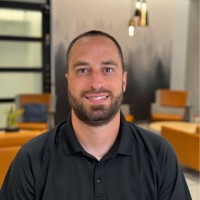
In this episode of the Benefits Broker Boost Podcast, Plansight CMO Adam Smith sits down with Ryan Wiggins, a Strategist for Employer Health Plan & Benefits at McGriff. With over a decade of experience spanning Cigna and UMR, Ryan shares a critical realization: moving away from the status quo requires a structural “rehab” of the health plan to focus on the individual employee’s financial and physical health.
The conversation explores the “Broker 3.0” model, the necessity of a seven-step health plan structure, and why scaling smarter with AI is essential for navigating the increasingly complex world of pharmacy contract reconciliation.
Ryan outlines the transition of the insurance broker from a simple policy procurer (1.0) to a compliance and HR expert (2.0), and finally to the modern Broker 3.0. This new iteration is defined by independent thought leadership and hyper-specialization.
“When Cole and I were kind of thinking about what’s the next iteration of the brokerage consulting model, what is that going to look like, we believe that it’s going to be independent thought leadership that people have specialized, they specialize in specific areas,” Ryan explains. By moving beyond the spreadsheet, consultants can provide deeper value in niche areas like pharmacy risk management and HR technology rather than acting as a commodity.

One of the most significant challenges for employers is the distraction of “shiny objects,” new, innovative products that don’t fit a cohesive strategy. Ryan advocates for a rigid, seven-step structure that serves as a “gospel” for the health plan.
Adam notes the importance of this grounding: “I love that you start with that structure because pulling things back to that structure, if you don’t have that, you can go down rabbit holes that are not ultimately getting you to your end goal.” This approach helps brokers move from data entry to strategy by ensuring every decision aligns with long-term goals rather than temporary trends. Ryan compares this to physical therapy: you might have to go through a little pain or irritation to repair the structure before you can start “lifting heavier” and adding new solutions.
With 60% of Americans unable to afford an unexpected $1,000 expense, Ryan argues that traditional high-deductible plans can create a financial “vortex” or crisis for employees. He suggests that the future of broker growth lies in offering alternative options, such as reference-based pricing, alongside traditional PPOs.
“We need to be able to provide options to the employees that are willing to be quote-unquote disrupted so that they feel confident they can afford a health plan,” Ryan says. By providing these choices, employers meet a moral obligation to protect their workforce from medical bankruptcy or wage garnishment while maintaining a trusted benefits platform.
A major “leak” in employer spending occurs in unmonitored pharmacy contracts. Ryan points out that PBM contracts have grown from 20 pages to over 120 pages, making them intentionally complex.
“The contract is the biggest exposure piece right now to any employer because on paper, when you look at things like rebates, you look at things like discounts. They’re very competitive across the board,” Ryan warns. He emphasizes that brokers must use tools like AI to reconcile these complex documents and ensure carriers are living up to their signed agreements, rather than simply relying on a reconciliation report.
When transitioning to self-funding, the biggest hurdle is often the “too risky” misconception from CFOs. Ryan believes the only way past this is through deep education on the “claims bucket,” administrative fees, and reinsurance.
“If they don’t understand the claims bucket, the administrative fees bucket, the reinsurance bucket, and the reserves bucket, they’re not gonna have a place to even start an understanding transition to self-funding,” Ryan notes. By teaching these core concepts, consultants empower employers to recognize the power they actually have to influence their health plan.
The transition from a “numbers bot” to a strategic consultant requires a commitment to education and a willingness to stand behind a unique story. As the industry moves from fax machines to AI, the brokers who succeed will be those who prioritize the structure of the health plan and the physical health of the population over simple insurance procurement.
If you haven’t seen Plansight in action and you want to, book a discovery call with us.
At the end of the day, Plansight is more than just an application. It is a partner built with brokerages and their benefits teams in mind. Plansight is the only AI application that manages your benefits renewal and marketing workflow. It brings transparency, consistency, and time savings to every group renewal.
From SmartSheetingAI™ to RFP automation to side-by-side comparisons to the intelligence of PlansightAI, everything we create is designed to lighten the load, reduce risk, and elevate your client relationships. Your team is your greatest asset, and Plansight is here to make sure they have the tools, insights, and support to shine.
Plansight works alongside leading General Agencies to help brokers move faster, stay compliant, and deliver a better client experience. You can explore our trusted GA partners here.
For brokers, Plansight transforms a manual, time-consuming RFP process into one that is faster, more efficient, and more profitable, without sacrificing accuracy or control.