.svg)
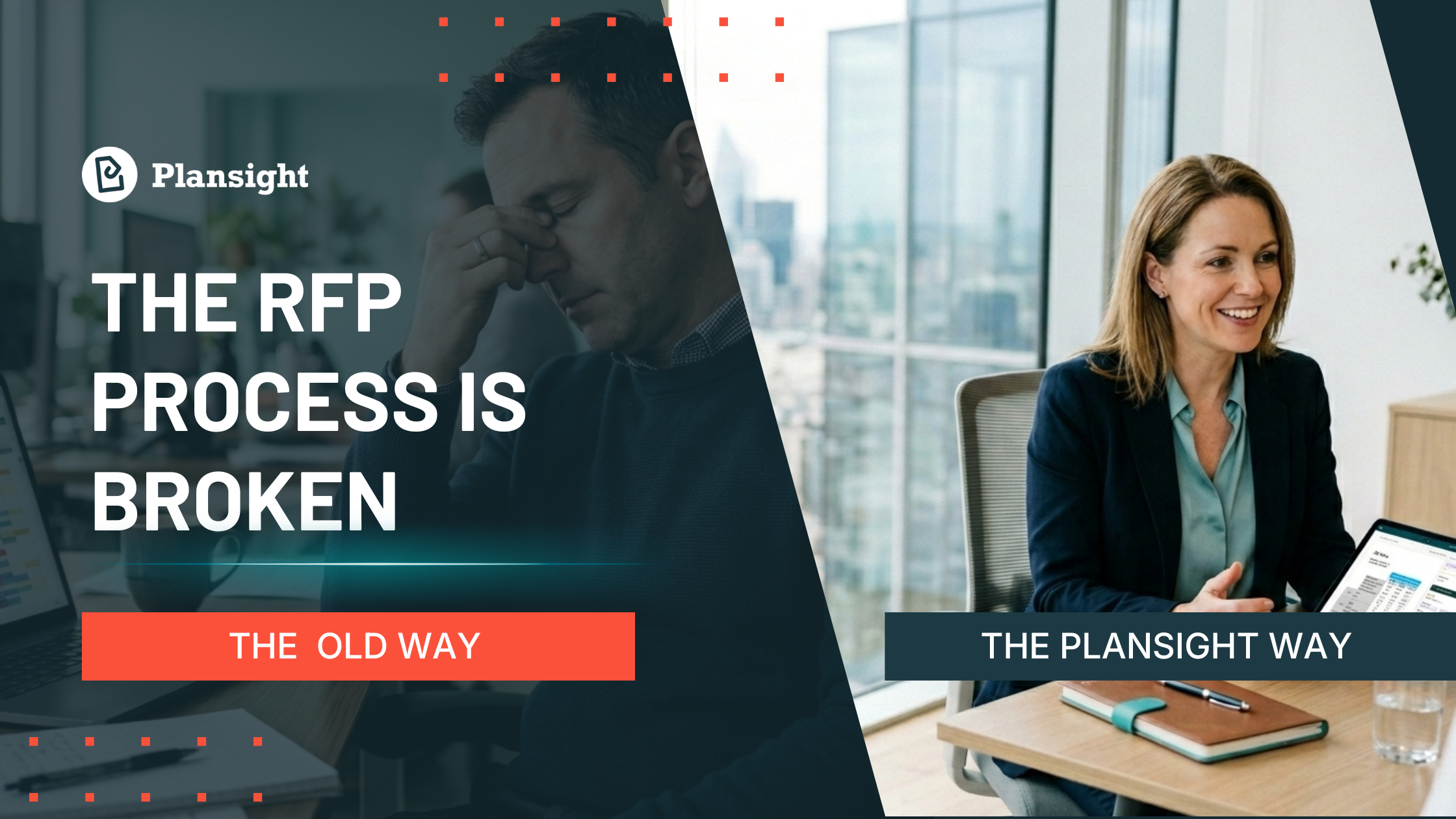
Most benefits brokers know the RFP process is painful. What they haven't stopped to calculate is what that pain actually costs them, in hours, in errors, and in business they never close.
The renewal and marketing process is one of the most time-intensive workflows in a benefits brokerage. It is also one of the least examined. Brokers have been doing it the same way for so long that the inefficiency has become invisible. It just feels like the job.
It is not just the job. It is a problem worth solving
Ask any account manager how long it takes to build out a full RFP package, and you will hear the same story regardless of group size: census data pulled from one system, reformatted for another, copied into carrier-specific spreadsheets, submitted through half a dozen separate portals, and then assembled into something client-ready from scratch.
Brokerages lose 10 to 15 hours of productive labor per marketed employer renewal to that manual process. That is not the total time on the case. That is recoverable time, the hours that disappear into data entry and reformatting before any strategic work begins.
Multiply that across a book of business with hundreds of renewals a year, and the math gets uncomfortable fast. At whatever your team's fully-loaded hourly cost runs, salary, benefits, and overhead combined, you are absorbing a significant labor bill every quarter just to produce marketing packages. Before the first carrier responds. Before a single renewal is won or lost.
For larger brokerages with bigger books, the numbers scale accordingly.
The labor burden runs 10 to 15 hours per marketed employer renewal, whether your team has been running on spreadsheets for 2 years or 20.

Speed, pressure, and manual data handling are a reliable formula for mistakes. The typical RFP workflow involves pulling data from one system, reformatting it for another system, copying it into a carrier-specific spreadsheet, and repeating the process for each carrier on the market list.
Every handoff is a chance for something to go wrong.
A miskeyed number can throw off the rate quote. A missing dependent changes the tier breakdown. A plan design detail that was copied and pasted from last year's submission rather than updated means the carrier is quoting the wrong benefit.
These errors do not always get caught before the quote comes back. Sometimes they surface when a carrier declines to bind. Sometimes they come out during implementation. Occasionally, they cost a client real money.
The most damaging version is the one that happens in the room. A client meeting where the numbers on the marketing presentation don't hold up under scrutiny. A CFO who spots a discrepancy mid-presentation. An HR director who asks a follow-up question your team can't answer quickly because the data lives in three different spreadsheets. Those moments don't just create extra work. They create doubt.
As Plansight CEO Weston Lunsford put it: "Every manual step is an opportunity for an error. And in renewals, those errors don't just cost time and money; they can cost trust."
Beyond the hard errors, there is the soft cost: the hours spent going back to carriers to correct submissions, reconciling quote differences that turn out to be data discrepancies, and explaining to clients why the numbers shifted between the proposal and the final contract.
Renewal automation with built-in QA/QC addresses exactly this layer of risk, catching variances before they become client conversations.
That is not the time that shows up in a single line item. But it is real, and it adds up.
Here is the cost that gets talked about the least, because it is the hardest to see: the business you do not close because your process is too slow.
Benefits buyers, especially HR directors and CFOs at growing companies, are not passive. They are managing deadlines, board conversations, and budget cycles. When a broker takes three weeks to deliver a marketing analysis, the client starts to wonder whether they have the right partner. In competitive situations, a faster broker wins.
Speed is not the only factor in a buying decision, but it is a factor. And a process built on manual data handling, email chains to carriers, and spreadsheet assembly is structurally slow. It cannot get meaningfully faster without changing the underlying workflow.
The deals you lose to a faster competitor rarely get coded as "lost due to a slow RFP process." They get coded as "went with another broker." The root cause stays buried.
The honest answer is that for most of brokerage history, there was no alternative. The RFP process was manual because every step had to be handled manually. Census data lived in one place, carrier templates lived somewhere else, and assembling a submission meant doing it by hand.
The firms that figured out how to systematize pieces of it, standardizing templates, building internal checklists, and training account managers to work faster, got a competitive edge. But they were still working within a fundamentally manual framework. Navigating the evolution of benefits technology can be difficult; the industry has been slow to adopt the same workflow automation that transformed other financial services sectors.
That has changed.
AI and automation have enabled the RFP and renewal marketing process to be compressed from hours to minutes. Not by cutting corners on what goes into the submission, but by eliminating the repetitive, error-prone manual steps that consume most of the time. Census data flows in once. Carrier submissions are generated automatically. The account manager's job becomes review and strategy, not data entry and reformatting. That shift, from data entry to strategy, is what separates the brokers building durable books from the ones running on fumes every quarter.
One brokerage using Plansight's renewal automation went from spending 8 to 10 hours per large renewal entering data and running comparisons down to under 30 minutes. That is not a rounding error. That is a fundamental change in what the team can do with the same workday.
A brokerage that recovers 10 to 15 hours per marketed renewal saves more than labor. It changes what the team can do with the capacity it gets back. Account managers spend time on client relationships, not spreadsheets. Producers can take on more cases without adding headcount. Renewals get turned around faster, which tightens the feedback loop with carriers and improves the quality of the analysis clients receive.
Purpose-built AI built for accuracy means the reduction in data errors is a direct result of removing the manual handoffs that caused them in the first place, not a side effect of moving faster.
And the business that does not walk out the door because your team could not keep up with demand? That is the number that tends to change the conversation.
Benefits brokers who retain clients over the long term are not just good at finding coverage. They are good at making the renewal feel like a strategic conversation instead of an annual fire drill. The brokers who pull ahead are the ones positioning themselves as strategic consultants, not just renewal coordinators. That positioning is only credible when the operational work underneath it actually runs smoothly.
That starts with a process that does not slow your team down every quarter.
The RFP problem is solvable. The question is whether you solve it before your competition does.
Getting up and running on Plansight is faster than most brokers expect; there is still time to have the process working for you before your next renewal cycle hits.
If you haven’t seen Plansight in action and you want to, book a discovery call with us.
At the end of the day, Plansight is more than just an application. It is a partner built with brokerages and their benefits teams in mind. Plansight is the only AI application that manages your benefits renewal and marketing workflow. It brings transparency, consistency, and time savings to every group renewal.
From SmartSheetingAI™ to RFP automation to side-by-side comparisons to the intelligence of PlansightAI™, everything we create is designed to lighten the load, reduce risk, and elevate your client relationships. Your team is your greatest asset, and Plansight is here to make sure they have the tools, insights, and support to shine.
Plansight works alongside leading General Agencies to help brokers move faster, stay compliant, and deliver a better client experience. You can explore our trusted GA partners here.
For brokers, Plansight transforms a manual, time-consuming RFP workflow into one that is faster, more efficient, and more profitable, without sacrificing accuracy or control.